National Average Mortgage Rates
Before you lock your loan, let North Star Mortgage Network compare your offer. We frequently help homebuyers secure lower rates, lower closing costs, or both.
The rates displayed above are national averages provided for general market comparison. Your actual interest rate and loan terms will vary based on factors such as your credit profile, loan program, down payment, property type, and other qualifying factors. Contact North Star Mortgage Network for a personalized rate quote.
Attention Homebuyers:
Did you get a rate quote from a bank or another mortgage lender?
Use our FREE Mortgage Offer Double Checker to make sure you're getting the best terms possible on your mortgage.
It only takes about 26 seconds, and there's absolutely no obligation!
Specializing in personalized mortgage solutions, fast customized quotes, great rates, & service with integrity
Award-Winning Florida Mortgage Broker | Locally Owned in Jacksonville, FL
Looking for a locally owned and operated Florida mortgage broker who puts your goals first?
At North Star Mortgage Network, we’re proud to be based in Jacksonville, FL, serving homebuyers and homeowners across the Sunshine State.
As an award-winning Florida mortgage broker, we specialize in personalized home loan solutions, fast approvals, and transparent service built on integrity. Since 2000, our mission has been clear — deliver the lowest possible rates, honest guidance, and unmatched service to every borrower we help.
Whether you’re buying your first home, refinancing, or investing in real estate, our team ensures a smooth, stress-free experience from start to finish.
Today's Rates
Locally Owned. Nationally Recognized. Always Trusted.
North Star Mortgage Network isn't a call-center lender or out-of-state corporation. We're locally owned and operated in Mandarin, Jacksonville — centrally located to serve all of Northeast Florida, including Duval, St. Johns, Clay, and Nassau counties, as well as across the state.
Our commitment to integrity, personal service, and results has earned us multiple industry honors, including:
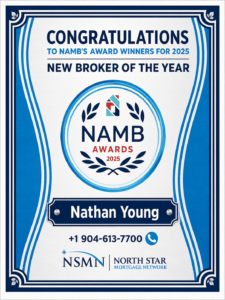
NAMB Mortgage Broker of the Year — 2025
2024 & 2025 Five-Star Mortgage Professional Award
Three Best Rated — Best Mortgage Services in Jacksonville 2023, 2024 & 2025
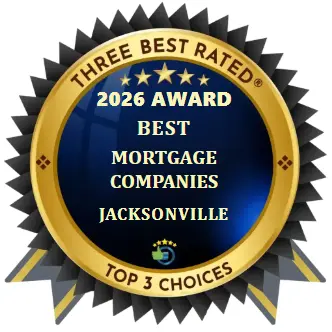
2026 Best Mortgage Companies in Jacksonville
Kev's Best — Best Mortgage Services in Jacksonville
BBB Accredited Business
These awards reflect what our clients already know — North Star Mortgage Network delivers exceptional service, clear communication, and competitive rates that consistently beat the big banks.
Comprehensive Loan Programs for Every Borrower
As a full-service Florida mortgage broker, we offer a complete range of programs designed to fit your needs and goals:
Conventional Loans: Great rates for credit-qualified buyers.
FHA Loans: Low down payment and flexible credit options.
VA Loans: 100% financing for eligible veterans and active-duty military.
USDA Loans: No down payment for eligible rural and suburban buyers.
Jumbo Loans: Financing for high-value and luxury homes.
Non-QM & Investor Loans: Perfect for self-employed buyers and real estate investors.
Refinance & Cash-Out Loans: Lower your rate or access your home's equity.
Down Payment Assistance: Helping first-time buyers achieve homeownership.
Every client receives a detailed rate comparison and personalized advice — because the right loan starts with the right lender.
Why Homebuyers Choose North Star Mortgage Network
Award-Winning Service
Recognized throughout Florida for integrity and performance, our award-winning team is known for fast responses, clear answers, and smooth closings.
Locally Owned and Operated
We live, work, and raise our families right here in Jacksonville, FL. Our local insight gives you an edge when navigating Florida’s unique housing market, property taxes, and insurance challenges.
Transparency and Trust
You’ll never face hidden fees, surprises, or confusing terms — just straightforward guidance from seasoned professionals who put your best interest first.
Fast, Reliable Approvals
We use advanced technology with hands-on communication, so your loan closes quickly without losing that personal touch.
Long-Term Relationships
Most of our clients return to refinance or buy again — not because they have to, but because they want to. That loyalty speaks volumes.
Proudly Serving Florida – Coast to Coast
From Jacksonville and St. Augustine to Tampa, Orlando, and South Florida, our team helps homebuyers across the state find the right mortgage — at the right rate.
Because we're Floridians too, we understand what matters most: dependable service, clear communication, and financing built around your future.
Areas We Serve
North Star Mortgage Network proudly serves homebuyers and homeowners throughout Northeast Florida and beyond, including:
- St. Johns County Mortgage Broker
- Clay County Mortgage Broker
- Nassau County Mortgage Broker
- Ponte Vedra Beach Mortgage Broker
- Orange Park Mortgage Broker
- Fleming Island Mortgage Broker
- Fernandina Beach Mortgage Broker
- Jacksonville Beach Mortgage Broker
- Atlantic Beach Mortgage Broker
- Nocatee Mortgage Broker
- Yulee Mortgage Broker
- Middleburg Mortgage Broker
- Fruit Cove Mortgage Broker
- Amelia Island Mortgage Broker
Check Out Our Google Reviews
-
Absolutely amazing experience using our VA loan. Our lender was knowledgeable, responsive, and made the entire process smooth from start to finish. They explained everything clearly, fought for the best... read more
Linnea Privette
January 24, 2026Outstanding communication from North Star Mortgage. Nathan was fantastic to work with though the whole process. I would highly recommend
rob kap
January 17, 2026Nathan and North Star Mortgage Network is the best mortgage broker to work with. He is a great communicator and streamlines processes to close loans efficiently. Love... read more
Rita Kikoen
January 16, 2026 -
Nathan amd Karla are one of the best in he industry! We love working with them!
Laura Enmon
December 17, 2025Thank you to Christy Nathan and karla you guys were awesome because of y’all we have a house thank you so much for everything
Stephanie Royal
December 11, 2025I would highly recommend North Star for anyone looking to purchase a home! Nathan made the process smooth and easy. I am a first time home buyer and thanks to... read more
Kacey Claire
November 14, 2025 -
Mr. Nathan and his team are exceptional! The very best! They walked me through step by step in a new process for me with so much patience and genuine care.... read more
Josie F
October 23, 2025I can't say enough great things about Nathan and his team. He made a stressful move a breeze! Nathan is the perfect combination of caring, efficient, and proactive. If I... read more
Dawn Behrend
October 22, 2025Nathan & Karla were incredible! Very communicative, professional and helpful throughout the entire process! Being a transaction coordinator on the listing side they made the entire process... read more
Travis Moore
October 17, 2025 -
Nathan Young with NSMN is your go to Mortgage Loan Officer in Florida. Working with him and the team at NSMN is always an absolute pleasure. His comprehensive knowledge of... read more
Heather Samson
October 16, 2025Nathan and his team got the job done!
Christina Kelcourse
October 13, 2025Nathan with North Star Mortgage Network is a legend! Personal, professional, and great at what does. Made the process easy! Quick to respond, and was always there if I needed... read more
Wade Hosseini
October 7, 2025 -
Each time I've worked with Nathan has been nothing short of an excellent experience. He's always been very responsive and proactive each step of the way - making sure myself... read more
David Rosenblum
September 26, 2025Nathan was phenomenal! He was great at communicating and he worked diligently to get us to become home owners! The entire experience was great. He explained what everything was and... read more
Ashley Simpson
September 25, 20251st transaction with North Star Mortgage, as a closing agent we were very pleased at how easy it was to work with Nathan. He provided excellent, professional, and prompt service.... read more
Lissette Aguilar
September 22, 2025 -
I had a wonderful experience working with Nathan and Karla. From start to finish, the process was smooth and stress-free. They were always quick to respond and very knowledgeable about... read more
Bita Shahgaldi
August 29, 2025We just did a closing on our investment property Nathan make the process very smooth and quick We recommend him to all our friend and customers Thank you Nathan
Alketi Cela
August 21, 2025We just did a closing on our investment property Nathan make the process very smooth and quick We recommend him to all our friend and customers Thank you Nathan
Alketi Cela
August 14, 2025 -
This is our second time working with Nathan, and once again he exceeded our expectations. He made the mortgage process for our investment property smooth, stress-free, and efficient. Nathan is... read more
james hooper
July 28, 2025I just closed on my house yesterday and while there were obstacles in the home buying process, I appreciated Nathan and Karla’s insight and assistance. We had several people in... read more
Jennifer McMann
July 28, 2025I just closed on my house yesterday and while there were obstacles in the home buying process, I appreciated Nathan and Karla’s insight and assistance. We had several people in... read more
Jennifer McMann
July 26, 2025 -
This is our second time working with Nathan, and once again he exceeded our expectations. He made the mortgage process for our investment property smooth, stress-free, and efficient. Nathan is... read more
james hooper
July 3, 2025I highly recommend Nathan and North Star Mortgage if you are looking for a mortgage loan in the Jacksonville, Florida area! He was clear, honest and straight forward throughout the... read more
Lesa Kerley
May 28, 2025Exceptional Experience with Nathan and Michelle! I can’t express enough how grateful I am for Nathan and his team. After feeling discouraged by previous lenders and realtors who only saw me... read more
Jonathan Barnhisel
May 28, 2025 -
Always professional, quick to help you with anything got me into my home very quickly I truly appreciate North Star Mortgage
Knight Gamer
May 28, 2025It was a pleasure working with Nathan and his staff. He was able to get us a good interest rate and was quick to respond text, emails, and phone... read more
R Larry
April 28, 2025Amazing quick responces, easy to do business with and great at telling you what is needed or not!
Hailey Robinson
March 28, 2025 -
From the initial quote to the ALTA statement through closing…Nate and team were great to work with! Upfront, honest, and very responsive. I highly recommend NSMN.
Aaron P
March 28, 2025Nathan and Karla are great to work with.
Lisa Gell
March 28, 2025I highly recommend North Star Mortgage Network. Nathan was able to secure us an interest rate below the rates that we received from Vystar and others. His team made our... read more
Drew Johnstone
March 28, 2025